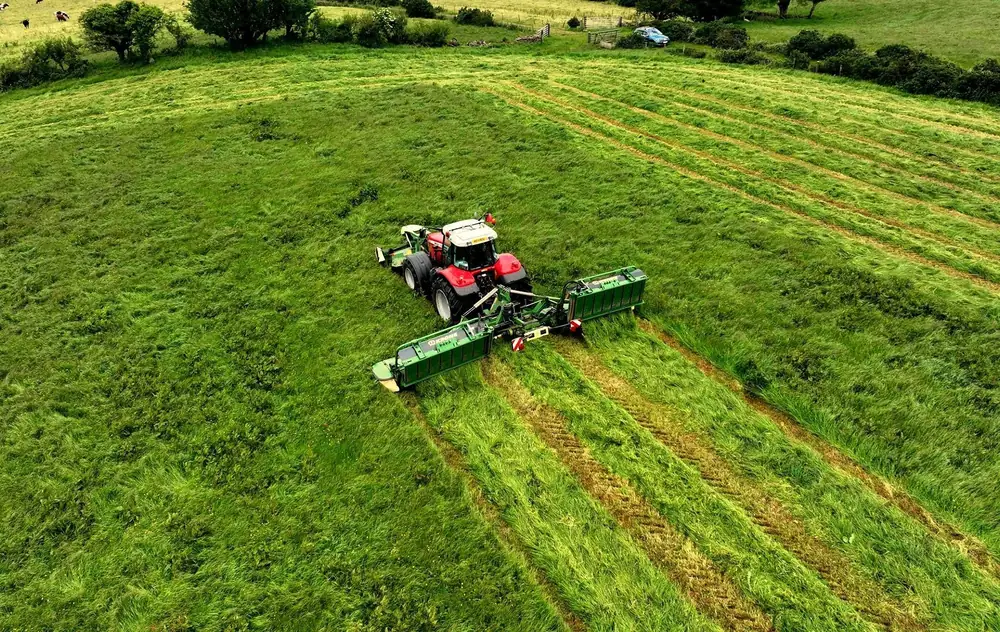
Autosteer for Combines
Serving the United States
By the Deep Sand Technology support team · authorized FJDynamics dealer · selling, shipping and supporting autosteer in all 50 states
Rear-steer, done right
- Created by Farmers for Farmers
- Buy-Back Guarantee
- Two-Year Warranty
- Precision Products for New and Older Equipment
Call or text 8:00 am to 8:00 pm, seven days a week.
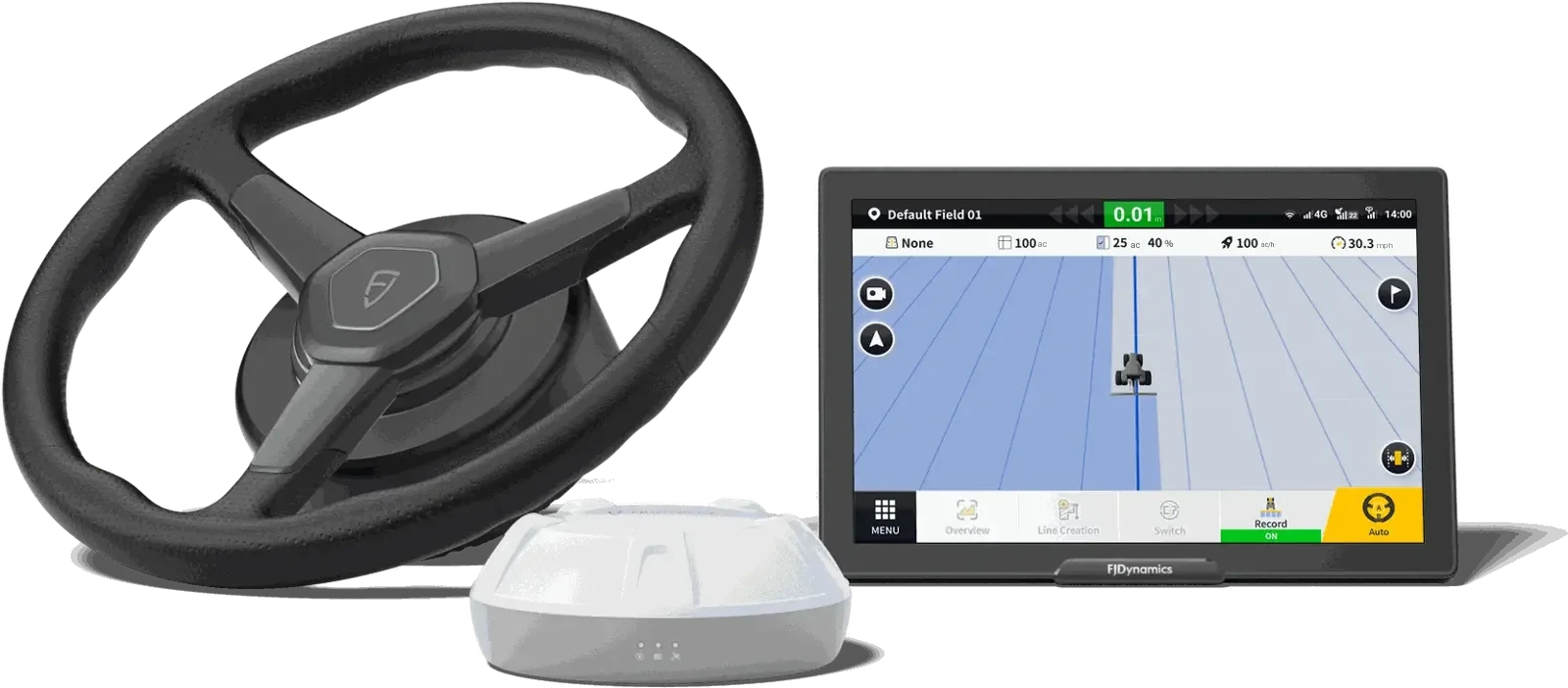
Deep Sand Technology sells, ships and supports FJD auto steer in all 50 states. Questions while you read? Call or text (580) 394-0089.
Autosteer for combines: what fits, how the install goes, what you get
Yes, the FJD AT2 kits steer combines, and they do it well. A combine is a rear-steer machine, so the setup is different from a tractor: the vehicle type is set to harvester, the steering is set to rear wheel, and most combines run without a wheel angle sensor at all. The motor goes on the steering column, the receiver goes on the cab roof, and you run a full header all day and all night.
Deep Sand Technology's take. Our standard combine setup is an AT2 kit in harvester mode, rear-wheel steering, no wheel angle sensor. We have run it that way on Deere STS, Lexion and Gleaner machines, and the same kit moves to a tractor after harvest.
- Full headerUse the whole cut width instead of leaving a foot of overlap on every pass
- All nightThe combine steers; you watch the header and the grain tank
- One kit, two machinesMove the system to the planting tractor after harvest
- Two-year warrantyUS based set-up help by phone and remote login, 8 AM to 8 PM daily
Why combines are different from tractors
- They steer from the back. The rear wheels turn, so the machine swings its tail to change heading. The software knows this when the vehicle type is set to harvester and steering is set to rear wheel. It leads the line further ahead and damps the correction so the header does not hunt.
- Most run without a wheel angle sensor. On a front-steer tractor the sensor on the axle tells the system where the wheels are pointed. Rear-steer combines steer straight on heading alone with the right control model and heading stability turned on. We set those values for you.
- The receiver sits a long way from the steering axle. The distance from the roof receiver back to the rear axle goes into the setup. Get it right and the header edge lands where the screen says it will.
- Speed matters more. A combine at 4 to 6 mph with a 40-foot header does not want quick corrections. The settings that make a tractor crisp make a combine wag. Combine settings are their own recipe, and we have it.
Nothing in the hydraulics is touched. The motor turns the steering wheel the same way your hands do. Turn the system off and the combine is exactly what it was. The AH2 hydraulic kit is there for factory-valve combines where the farmer wants the wheel left stock.
Combines our kits go on
A sample. If yours is not here, call us with the model and a photo of the steering column; the bracket and spline adapter are what we need to match.
| Brand | Models | Which kit fits |
|---|---|---|
| John Deere | 9570, 9660, 9770 STS; S660 to S790; older 9500 and 9600 | AT2 motor kit on the column. Receiver on the cab roof. |
| Case IH | 2588, 7088, 8120, Axial-Flow 30 to 50 series | AT2 motor kit. The 2588 is rear-wheel steer, set that way in the software. |
| Gleaner | R65, R76, S series | AT2 motor kit. The R76 takes the same spline adapter as a Massey 9895. |
| Claas | Lexion wheeled and tracked, Jaguar choppers | AT2 motor kit, no wheel angle sensor on the tracked Lexion. |
| New Holland | CR and CX series | AT2 motor kit. Same cab family as Case IH on the newer machines. |
What a full header is worth
A 40-foot header run by hand usually leaves a foot or more of overlap on every pass so you do not leave a strip. That is two and a half percent of your acres cut twice: fuel, hours and wear for nothing. Autosteer puts the header edge on the last pass within an inch or two, so you cut the width you paid for. At night, in dust, in a crop that all looks the same, the difference is bigger than the math.
What goes on the combine
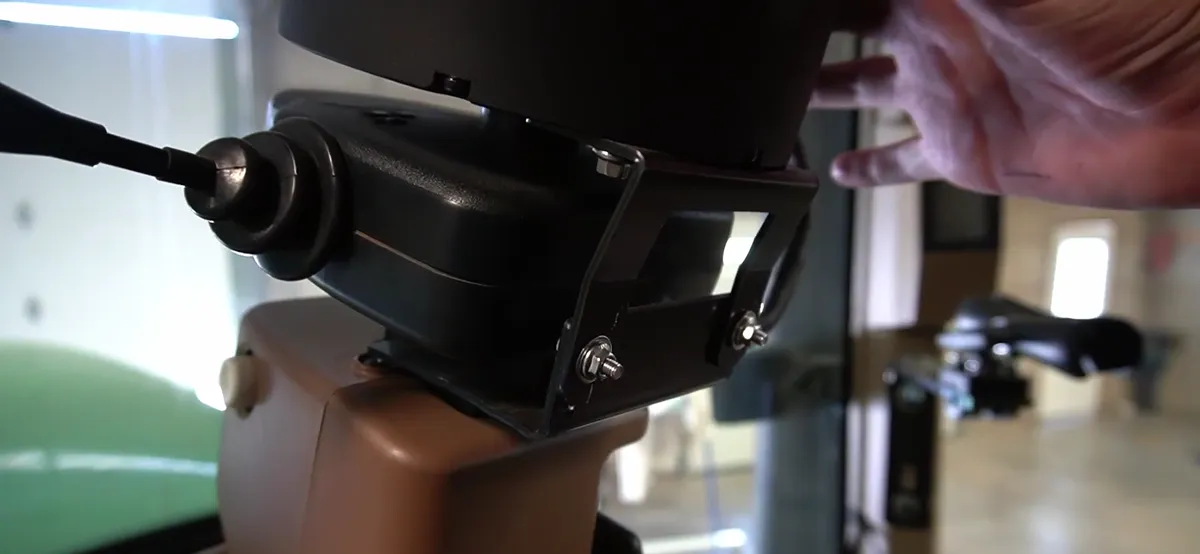
- The motorized steering wheel on the column, with the spline adapter and bracket matched to your cab.
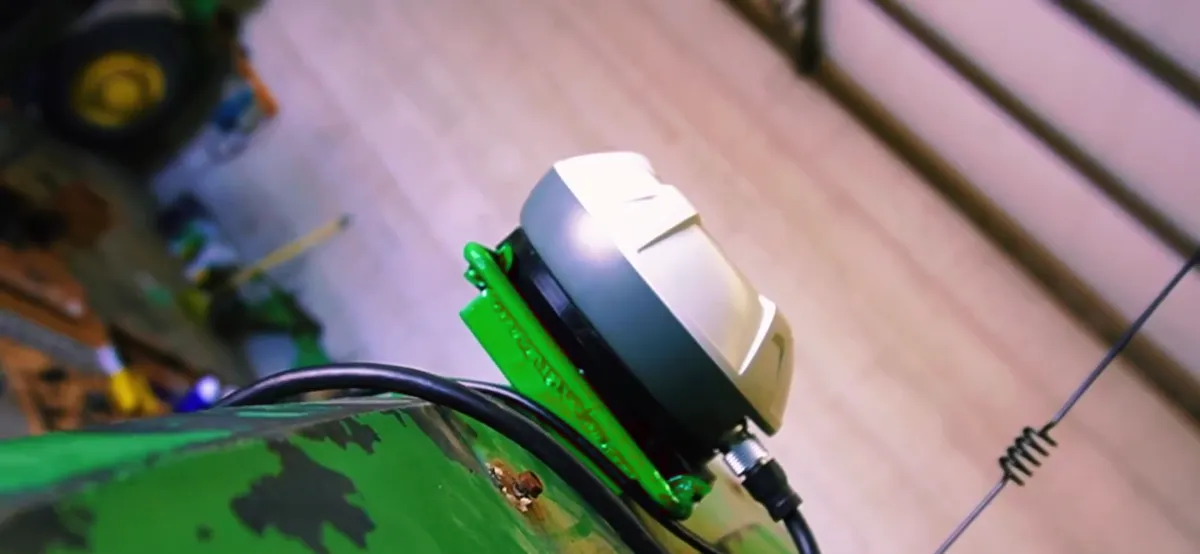
- The receiver on the cab roof, with the RTK correction over cellular or radio.
- The display where you want it. The 10-inch on the AT2 Lite and AT2, 12-inch on the AT2 Max.
- A fused 12-volt lead to the battery. No combine wiring touched.
What goes on the column
Which FJD kit for a combine
Almost always the electric motor kit. The AT2 Lite is steering only and plenty for a combine. The AT2 and AT2 Max make sense if the same system will run ISOBUS implement control on the planting tractor the rest of the year. A combine with a factory steering valve can take the AH2. The FJD auto steer systems page compares them side by side.
What to send us for a quote
- Make, model and year of the combine
- A photo of the steering wheel and column from the seat
- Whether it ever had a dealer guidance system on it
- Which tractor, if any, the kit will move to after harvest
- Your farm location so we check RTK coverage
After the sale
Autosteer quits in the middle of planting. Who picks up the phone?
We do. You get a tech on the phone right away, and we can remote into your display while you sit in the cab. That is usually faster than waiting on a dealer truck.
- 01
Before you buy
Call or text and talk to a farmer. Quotes are delivered the same day, and we match the kit to your tractor before anything ships.
- 02
Before it ships
We offer both radio and NTRIP RTK, and every system ships set up on NTRIP RTK. Most orders ship within 24 hours.
- 03
Install day
Most farmers install it themselves in an afternoon with our tech on the phone.
- 04
In the field
Call or text 8:00 am to 8:00 pm, seven days a week. We can remote into your display while you sit in the cab.
Common questions
Does a combine need a wheel angle sensor?
Usually not. Rear-steer combines with the right settings steer straight without one. Our standard combine setup uses no angle sensor, and we have run it that way on Deere STS, Lexion and Gleaner machines. It does not hurt to add one, and on a few machines it helps, but it is not required.
Which combines have you put kits on?
John Deere 9570, 9660 and 9770 STS and the S-series, Case IH 2588 and 8120, Gleaner R65 and R76, Claas Lexion including tracked machines, New Holland CR, and self-propelled choppers. Send us the model and we will tell you the bracket and spline adapter it takes.
Can I move the kit between the combine and a tractor?
Yes. Harvest is a few weeks a year, so a lot of farmers buy the extra column parts and move one system between the combine and the planting or spraying tractor. The display, receiver and controller unplug and go along.
How accurate does it hold at harvest speed?
A rear-steer machine responds slower than a front-steer tractor, so the software leads the line a little further ahead. Set up right, a combine holds the header edge within an inch or two at normal harvest speeds. We set it up with you on the phone the first time.
Do I need RTK on a combine?
RTK gives you the same line every pass and lets you pick the header edge up exactly. Some farmers run a combine on PPP or WAAS because they are not planting on the lines later; the AT2 supports all three and switching between them is a menu setting. See RTK vs WAAS for the plain-language version.
Does it run the header or the yield monitor?
The autosteer kit steers. Yield mapping is a separate FJD product, the AYM yield monitor, which uses the same display. We can quote both.
What about a combine that was guidance-ready from the factory?
Newer combines with a factory valve can take the AH2 hydraulic kit, which plugs into the valve and leaves the steering wheel stock. Most combines we see get the motor kit because it moves to a tractor after harvest.
It's easy to get started.Talk to a farmer today.
More on auto steer
Auto steer for tractors · How auto steer works · Is my tractor steer-ready? · Auto steer for older tractors · Hydraulic auto steer (AH2) · AS2 steer-ready · Compare FJD auto steer systems · Tractor GPS systems · RTK vs WAAS · FJD AT2 vs Wheelman · FJD AT2 vs Trimble EZ-Steer · What auto steer costs · FJD AT2 vs Ag Leader · FJD AT2 vs FieldBee · FJD AT2 vs Outback · FJD AT2 vs Raven · All buyer guides · Autosteer solutions across the United States
Published 10/13/2026 by the Deep Sand Technology support team. Updated 11/1/2026. Written from the installs we walk farmers through and our support calls on farms across the US, not from a brochure.

About Deep Sand Technology
Deep Sand Technology (Deep Sand Tech) is a farmer-owned, authorized FJDynamics dealer with over 30 years of experience. We sell, ship and support FJD autosteer kits and GEODNET network RTK for thousands of farmers across the US, in all 50 states. Everything on this page comes from the installs we walk farmers through and our support calls, not from a brochure.
About us · Farmer reviews · Talk to a farmer · Call or text (580) 394-0089
Learn more about
Deep Sand Tech
Serving the United States. Deep Sand Tech specializes in affordable, industry leading, agricultural autosteering systems and agtech management support. Two-year warranty. Buy-back guarantee. Talk to a farmer today.
Watch Video